When the Machine Picks Up a Paintbrush: AI Art and the Identity Crisis Reshaping Digital Creativity
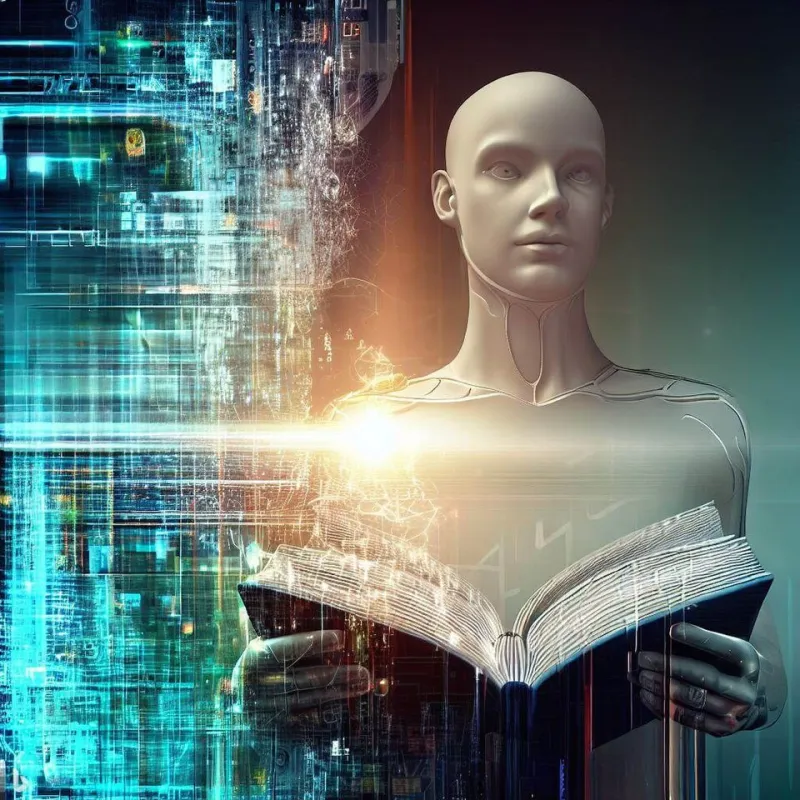
Photo: Microsoft Bing, CC BY-SA 4.0, via Wikimedia Commons
There's a moment — you've probably had it — where you stare at a piece of AI-generated imagery and feel genuinely unsettled. Not because it's ugly. Because it's beautiful. Because some part of your brain whispers, a person didn't make this, and suddenly you're not sure how to feel about the fact that you love it anyway.
That tension? It's basically the entire conversation happening in digital art circles right now. And it's not slowing down.
AI art tools like Midjourney, Stable Diffusion, and Adobe's Firefly have exploded into the mainstream over the past couple of years, dragging a whole mess of philosophical, legal, and creative debates along with them. For experimental artists working in digital spaces — the kind of people who've always lived on the edge of what's possible — this moment feels like both a gift and a grenade.
The Creative Playground Nobody Asked For (But Everyone's Using)
Let's be real: the tools are wild. Feed a model a few words — "bioluminescent cathedral melting into static" — and within seconds you've got something that would take a trained illustrator days to render. For artists who work in experimental media, that speed is intoxicating.
Jordan Vex, a Brooklyn-based digital artist who blends generative visuals with ambient soundscapes, describes the experience as "like having a collaborator who never sleeps, never judges, and has absorbed every image ever uploaded to the internet." They started incorporating AI outputs into their work about two years ago, initially just as texture references. Now the algorithm is embedded in their entire process.
"I stopped thinking of it as the AI making art," Jordan says. "I think of it more like — I'm the director, and the model is this incredibly weird, slightly unhinged actor who brings stuff to the table I never would've thought of."
That framing — artist as curator, director, or co-author rather than sole creator — is showing up a lot in conversations with experimental digital creators. It reframes the anxiety around authorship into something more collaborative and, honestly, more interesting.
But Who Actually Owns This Stuff?
Here's where things get genuinely complicated. The legal landscape around AI-generated art in the US is still basically a construction zone with no hard hat signs. The Copyright Office has been wrestling with whether AI outputs can be copyrighted at all — and so far, the answer has largely been no, unless there's substantial human authorship involved.
That creates a weird limbo. An artist who spends hours crafting prompts, curating outputs, layering them with hand-drawn elements, and refining the final composition — are they the author? Most people's gut says yes. The law is still catching up.
Meanwhile, there's the bigger, thornier issue sitting underneath all of this: AI models were trained on existing art, much of it scraped from the internet without the original creators' consent. Artists like Kelly McKernan and Greg Rutkowski have been vocal about finding their distinctive styles mimicked by AI outputs — and they weren't asked, weren't compensated, and weren't even notified.
For the digital art community, this isn't abstract. It's personal. Many of the same experimental artists exploring AI tools are simultaneously furious about how those tools were built.
"I use it, and I feel conflicted about using it," admits Sable Orin, a Chicago-based multimedia artist whose work has been featured in several online experimental art showcases. "The outputs are incredible. But I know the model learned from people who didn't sign up for this. That's not nothing."
Platforms Are Scrambling — and It Shows
ArtStation, DeviantArt, Adobe Stock, Getty — every major platform has had to figure out, on the fly, how to handle AI-generated submissions. Some have banned them outright. Others require disclosure. A few have leaned in and built AI tools directly into their ecosystems, which has created its own backlash.
The authentication problem is real. Without a reliable way to verify whether an image was human-made, AI-assisted, or fully generated by a model, platforms are essentially operating on the honor system. And the honor system, as anyone who's been online for five minutes knows, has some gaps.
There are emerging tools — like Content Credentials, developed through the Coalition for Content Provenance and Authenticity (C2PA) — that embed metadata into images to track their origin and editing history. Adobe has been pushing this standard hard. But adoption is uneven, and determined bad actors can strip metadata pretty easily.
For experimental art communities, the authenticity conversation cuts even deeper. When the whole point of your work is to blur boundaries and subvert expectations, what does "authentic" even mean? It's a question that doesn't have a clean answer.
The Weird, Generative Future
Here's the thing about all this chaos: it's also kind of exciting? The digital art world has always mutated in response to new tools. Photography threatened painting. Digital illustration threatened photography. Each time, the medium didn't die — it evolved, expanded, and found new forms of expression that weren't possible before.
AI feels different in scale, maybe. But the underlying dynamic isn't new. Artists adapt. The most interesting ones don't just adapt — they get weird with it.
There's a growing cohort of creators who are using AI not to generate pretty pictures, but to interrogate the tool itself. Artists who feed models deliberately broken prompts to surface glitches and artifacts. Creators who use AI outputs as raw material for hand-painted works, then document the entire process as part of the piece. Experimental composers who use image-to-audio AI pipelines to translate visual noise into sound.
That's the spirit that feels most alive to us at Scozaq — the artists who look at a new technology and ask what can this do that nothing else can? rather than how do I use this to do what I already do, faster?
So Is This the Future?
Probably — in the sense that AI tools aren't going away, and their role in digital creative workflows is only going to grow. But "the future of digital expression" isn't a single thing. It's a thousand different experiments running simultaneously, some of them brilliant, some of them ethically messy, most of them somewhere in between.
The artists who are going to define this era aren't necessarily the ones generating the most stunning images. They're the ones asking the hardest questions — about authorship, about labor, about what it means to make something — and building work that holds those questions open rather than pretending to answer them.
That's always been the job of experimental art. The canvas just got a lot stranger.